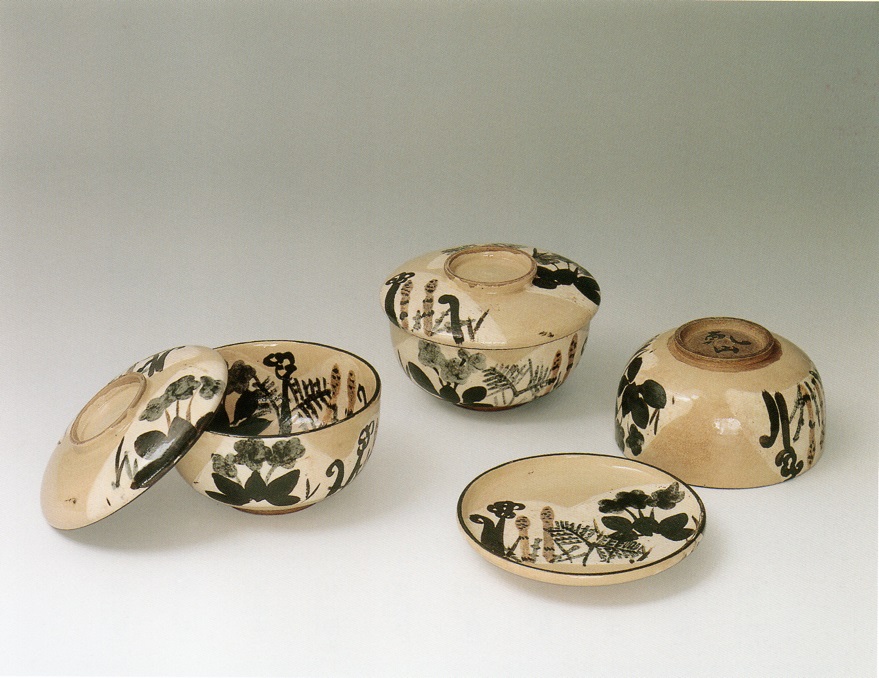
Special Exhibition:Spring Exhibition “Rinpa-style Pottery ー Inspired by Kenzan !”
Organizing:Yuki Museum of Art
Venue:Yuki Museum of Art
Nearest Station:5-minute walk from Osaka Metro Midosuji Line “Yodoyabashi” Station Exit 11, 8-minute walk from Keihan Main Line “Yodoyabashi” Station Exit 8
Date:2026-04-01(Wed)~2026-07-12(Sun)
*First semester:4/1(Wed)~5/17(Sun), Second semester:5/20(Wed)~7/12(Sun)
Opening time:10:00~16:30(Last admission at 4:00PM.)
Closed:Monday(Except for 5/4), 5/19
Admission fee:General 700 yen, College student 400 yen, High school student 300 yen
Contact Information:TEL 06-6203-0188
URL:http://www.yuki-museum.or.jp/exhibition/index.html
Tickets:Please pay at the Yuki Museum of Art reception desk (cash only).
More Information:Rinpa is a representative style of Japanese art from the Edo period, and its splendor and design continue to be appreciated today, widely accepted as a uniquely Japanese “beauty.” Beginning with Tawaraya Sōtatsu and Hon’ami Kōetsu, who were active in the early Edo period, it developed further in the mid-Edo period through the brothers Ogata Kōrin and Kenzan, and continued to diversify in the late Edo period through Sakai Hōitsu and Suzuki Kiitsu.
While Rinpa is often discussed in terms of painting, it also had a significant influence on the decoration of “vessels.” Kenzan, in particular, who was active in Kyoto, was the brother of the painter Kōrin, and he gained attention for creating unique ceramics that combined calligraphy and painting in a literati style, which became very popular. Kenzan’s works were also incorporated into the tea ceremony, adding color to the setting.
This exhibition will feature over 40 works, primarily focusing on Kenzan’s pottery, including the Rust-Plated Blue and White Spring Grass Patterned Covered Tea Bowl (one of 10 pieces), as well as works by Ninsei, who brought about a revolutionary change in ceramic painting, such as the “Colored Fan Patterned Tea Bowl,” and by Nin’ami Dohachi, who later produced a wide variety of pottery including those of the Rinpa school, such as the “Colored Cherry Blossom Openwork Bowl.” Paintings by Tawaraya Sotatsu and Sakai Hoitsu will also be on display.